
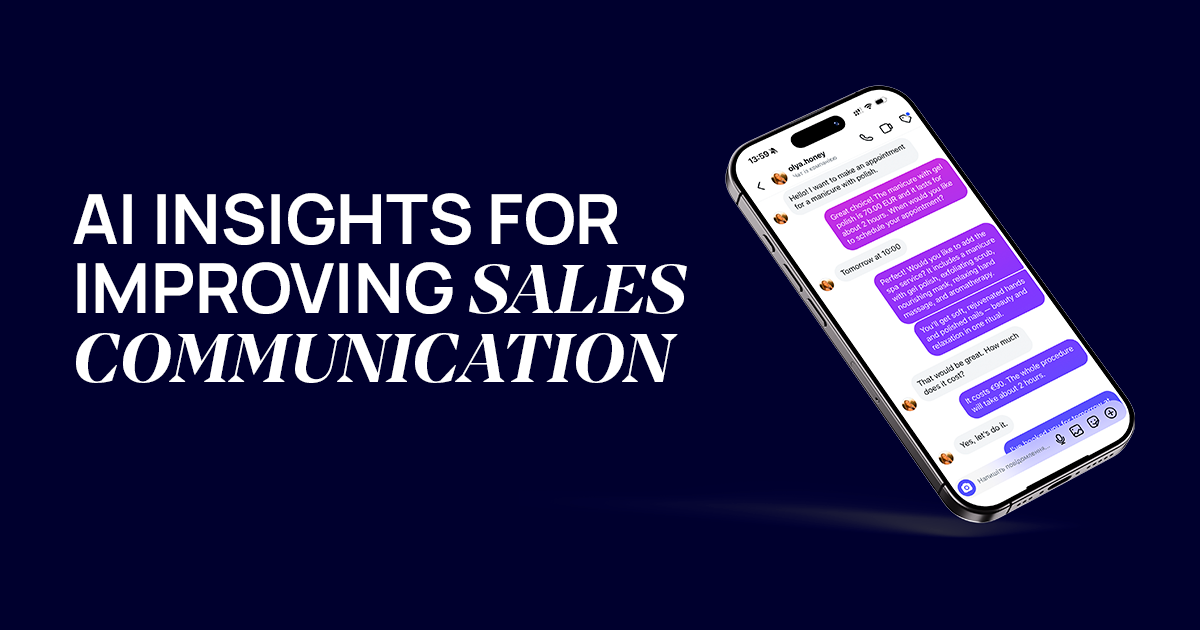
Adapted from Halper Blog and republished on Alpa Marketing with additional insights for sales teams, founders, and service-based businesses.
Sales communication rarely breaks because someone says the wrong thing.
More often, it breaks because the right message arrives too late. Or without context. Or after the buyer has already moved on.
That gap between intent and timing is where most sales friction lives. And it’s exactly why AI insights for improving sales communication have started to matter.
This shift explains the growing interest in tools like Halper, an AI Business Manager designed for sales and operations. Not because it automates messages, but because it helps teams understand what’s actually happening inside conversations.
This article looks at how AI insights improve sales communication, how teams use them in real workflows, and how Halper applies these insights at the business level.
What “AI Insights” Mean in Sales Communication
AI insights are often misunderstood. They’re not about writing messages for salespeople or replacing human judgment.
In sales communication, AI insights are about interpretation, not execution.
They help teams see things that are hard to track manually:
-
how prospects respond over time
-
where engagement drops
-
which messages signal interest or hesitation
-
when follow-ups help and when they hurt
Platforms like Halper apply AI insights to live conversations across channels. Everyday messages become structured signals through AI-powered client communication and CRM automation, rather than isolated exchanges.
That’s the core idea behind AI insights for improving sales communication.
Where Sales Communication Usually Breaks
Most sales teams already communicate constantly. Volume isn’t the issue.
The problems tend to be structural:
-
conversations happen across multiple channels
-
context gets lost between touchpoints
-
follow-ups rely on memory or discipline
-
pipeline stages don’t reflect real engagement
A deal can look active in a CRM while the actual conversation has gone quiet. Halper addresses this disconnect by tying sales communication directly to pipeline logic across all supported messaging and communication channels.
From Messages to Patterns
An individual salesperson sees conversations one by one. AI sees patterns across hundreds of them.
Halper analyzes how conversations evolve over time and surfaces insights such as:
-
where deals typically stall
-
which questions tend to precede conversions
-
how long engagement lasts before it drops
-
when follow-ups are most effective
This is where AI insights for improving sales communication move from theory into daily use. Patterns become visible. Decisions become informed.
What the Data Shows About Timing and Sales Communication
Industry data reinforces the role of insight-driven communication.
Statista data shows that messaging platforms now dominate global communication, with WhatsApp remaining the most widely used messenger worldwide. As a result, more sales conversations happen inside chat-based environments than ever before.
HubSpot research consistently shows that faster response times lead to higher lead qualification and conversion rates. Delayed follow-ups remain one of the main reasons deals go cold.
HubSpot also reports that more than 70 percent of sales and marketing teams see improved conversion when automation and AI insights support follow-up consistency.
Halper is built around these realities, which are explored in more detail here.
AI Insights vs Traditional Sales Tools
Traditional sales tools still play an important role:
-
CRMs store data
-
automation tools execute tasks
-
dashboards report outcomes
What they usually lack is interpretation.
AI insights for improving sales communication fill this gap by explaining why conversations succeed or fail. Halper sits between communication and execution, interpreting signals and triggering the right actions at the right moment.
This also enables smarter revenue moments, including AI-driven upsell and cross-sell opportunities.
AI Insights Across Sales Channels
Sales conversations rarely stay in one place. They move between:
-
email
-
WhatsApp and other messaging apps
-
short calls
-
follow-up reminders
Halper centralizes these conversations and applies AI insights across channels, keeping sales communication consistent even as it moves.
More on the underlying system here.
Improving Follow-Ups With AI Insights
Follow-ups are where sales communication most often breaks down.
Halper uses AI insights to understand:
-
when silence signals hesitation
-
when it signals disengagement
-
when a follow-up will actually add value
Instead of rule-based reminders, teams get behavior-based follow-ups that feel timely rather than intrusive.
This shifts follow-ups from guesswork to informed action.
From Communication Insights to Pipeline Movement
Sales pipelines should reflect reality, not assumptions.
Halper connects conversation insights directly to pipeline movement by highlighting stalled conversations, surfacing at-risk deals, and aligning pipeline stages with real engagement rather than static rules.
Why Halper Is an AI Business Manager, Not Just an Assistant
Many tools describe themselves as AI sales assistants. Most of them focus on tasks.
Halper works as an AI Business Manager. It oversees how communication, pipeline stages, and operations connect across the business.
That’s what turns AI insights for improving sales communication into part of the system, not just another sales feature.
Learn more about Halper here.
Final Thoughts
Sales communication has never been about sending more messages. It has always been about knowing when and why to engage.
AI insights for improving sales communication turn conversations into signals that guide action. In an environment defined by speed, fragmentation, and constant messaging, insight becomes the real competitive advantage.
Follow Halper
Instagram | TikTok | Facebook | LinkedIn | YouTube | X / Twitter
Source: Adapted from Halper Blog. Edited and republished by Alpa Marketing.
