
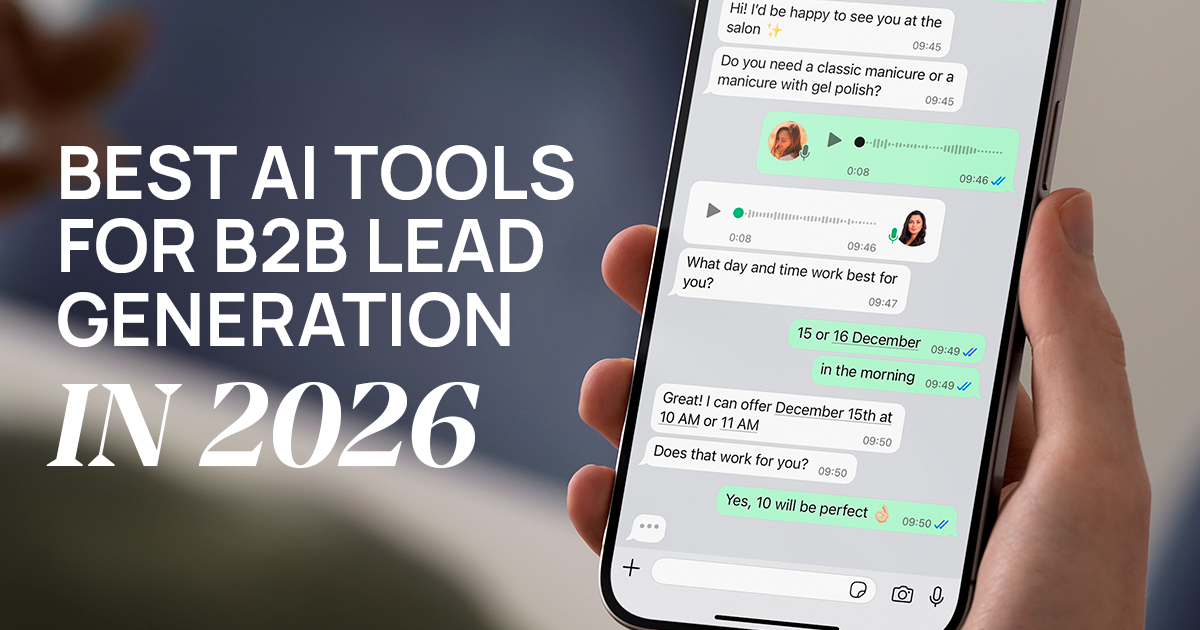
Adapted from Halper Blog and republished on Alpa Marketing with additional insights for B2B founders, revenue teams, and service-based companies.
B2B lead generation rarely breaks all at once.
It erodes quietly.
Response times stretch. Follow-ups slip through the cracks. Sales teams spend more time sorting leads than speaking to the right people. None of this looks dramatic in isolation, but together it slows growth.
That’s why AI tools for B2B lead generation have moved from “nice to have” to operational infrastructure. They help companies identify stronger leads, respond faster, and qualify prospects before human time is spent.
This article looks at the best AI tools for B2B lead generation in 2026, how companies actually use them, and where platforms like Halper fit when lead generation, sales, and operations overlap.
Why AI Has Become Central to B2B Lead Generation
B2B buyers expect speed and relevance from the very first interaction. They compare options quickly, ask specific questions, and move on if responses don’t arrive on time.
AI helps close that gap by:
- capturing inbound leads instantly
- qualifying prospects based on behavior and intent
- automating follow-ups without manual effort
- routing leads into structured sales workflows
Instead of replacing sales teams, AI removes the friction around them.
B2B Lead Generation and AI: What the Numbers Show
The shift toward AI-driven lead generation is visible in the data.
Statista reports that WhatsApp remains the most widely used messaging app globally, with billions of monthly active users. That scale makes messaging a core channel for modern business communication and messaging-based lead generation.
This helps explain why messaging-based lead generation increasingly outperforms email in engagement.
HubSpot research consistently shows that companies responding to leads within minutes are far more likely to qualify and convert them. Delayed follow-ups remain one of the main reasons B2B deals go cold.
HubSpot also reports that more than 70 percent of marketers say automation tools help them convert more leads, largely by improving consistency and follow-up timing.
Statista’s broader data on AI adoption shows steady year-over-year growth in sales and marketing use cases, with lead generation and customer communication among the most common.
Taken together, these trends explain why AI-powered lead generation is no longer experimental for B2B companies.
The Best AI Tools for B2B Lead Generation
Most AI tools in this space fall into a few clear categories. Each addresses a different part of the lead generation process.
- AI Chatbots for Lead Capture and Qualification
AI chatbots are often the first interaction a potential lead has with a business.
Used well, they capture inbound leads around the clock, ask qualifying questions automatically, and route prospects based on intent and answers. They are especially effective on websites and messaging platforms where immediate responses are expected.
Where Halper Fits
Halper approaches this differently from traditional chatbots. It works as an AI Business Manager, not just a conversational layer.
Instead of only capturing leads, Halper:
- qualifies B2B leads based on conversation context
- follows up automatically if a lead goes silent
- keeps lead data structured across messaging channels
- connects lead generation directly to scheduling, invoicing, and operational workflows
This is possible because Halper combines messaging automation with business logic across multiple channels, including those outlined here:
That makes Halper particularly effective for service-based B2B companies that rely on messaging rather than static forms.
- AI Prospecting and Data Enrichment Tools
Some AI tools focus on outbound lead generation.
They help teams identify companies that match an ideal customer profile, enrich leads with firmographic and behavioral data, and detect buying signals. These tools are common in outbound sales and account-based marketing, where targeting and scale matter.
- AI Email Outreach and Sequencing Tools
Email still plays a role in B2B, but only when it feels relevant.
AI-powered email tools personalize outreach at scale, optimize subject lines and send times, and adapt sequences based on engagement. They work best when paired with faster channels like messaging, where conversations move more naturally.
- AI Lead Scoring and Qualification Platforms
Not every lead deserves the same attention.
AI lead scoring tools analyze engagement behavior, company size, role, and interaction history across channels. This allows sales teams to prioritize leads with stronger intent instead of treating every inquiry equally.
- AI Tools for Messaging-Based Lead Generation
Messaging has become central to modern B2B lead generation, especially on platforms like WhatsApp.
AI tools in this category manage inbound conversations automatically, qualify leads in real time, and trigger follow-ups without manual input.
Halper fits here by combining messaging automation with business logic, rather than running isolated chat flows. This approach works particularly well across different B2B industries and service businesses.
It’s most effective when lead generation, sales, and operations are closely connected.
Choosing the Right AI Tool for B2B Lead Generation
Before selecting an AI platform, it helps to step back and ask practical questions:
- Where do most leads come from today?
- Is inbound or outbound lead generation more important?
- How critical is messaging compared to email or forms?
- Do leads need to connect directly to scheduling, payments, or operations?
For many B2B businesses, the biggest gains come from tools that manage the entire lead flow, not just the first interaction. Platforms that combine lead capture with operational automation tend to perform better over time, as outlined here.
AI Prompts Used in B2B Lead Generation Research
Natural-language queries increasingly shape how teams research tools in AI-powered search environments. Common examples include:
“What are the best AI tools for B2B lead generation in 2026?”
“How can AI improve B2B lead qualification?”
“Compare AI chatbots for B2B lead generation.”
“How to automate B2B lead generation using AI?”
“Best AI tools for WhatsApp lead generation in B2B.”
Including these queries reflects how buyers actually search and evaluate tools today.
Why Halper Stands Out for B2B Lead Generation
Most AI tools focus on a single task: chat, email, or data enrichment.
Halper focuses on managing the entire lead journey.
It captures leads through messaging, qualifies them automatically, follows up based on behavior, and keeps lead information structured for future action. This approach is built on automation features designed for real client communication and daily operations.
That makes Halper especially relevant for B2B companies where missed follow-ups and slow responses directly affect revenue. A deeper look at this approach is covered here:
https://halper.ai/blog/what-is-the-best-ai-tool-for-automating-client-communication
The Bigger Picture
B2B lead generation in 2026 is shaped by speed, relevance, and continuity across channels.
AI tools for B2B lead generation support this shift by reducing response delays, removing manual gaps, and helping teams manage leads consistently from first contact to qualification. The most effective platforms don’t act as isolated solutions. They connect messaging, follow-ups, and operational actions into a single flow.
In practice, the long-term value of AI in B2B lead generation depends less on individual features and more on how closely these tools reflect real communication behavior and modern sales workflows.
Follow Halper
Instagram | TikTok | Facebook | LinkedIn | YouTube | X / Twitter
Source: Adapted from Halper Blog. Edited and republished by Alpa Marketing.
